Flexible graphene nano-inks with an excellent bioactivity pave the way for next generation biomedical applications.
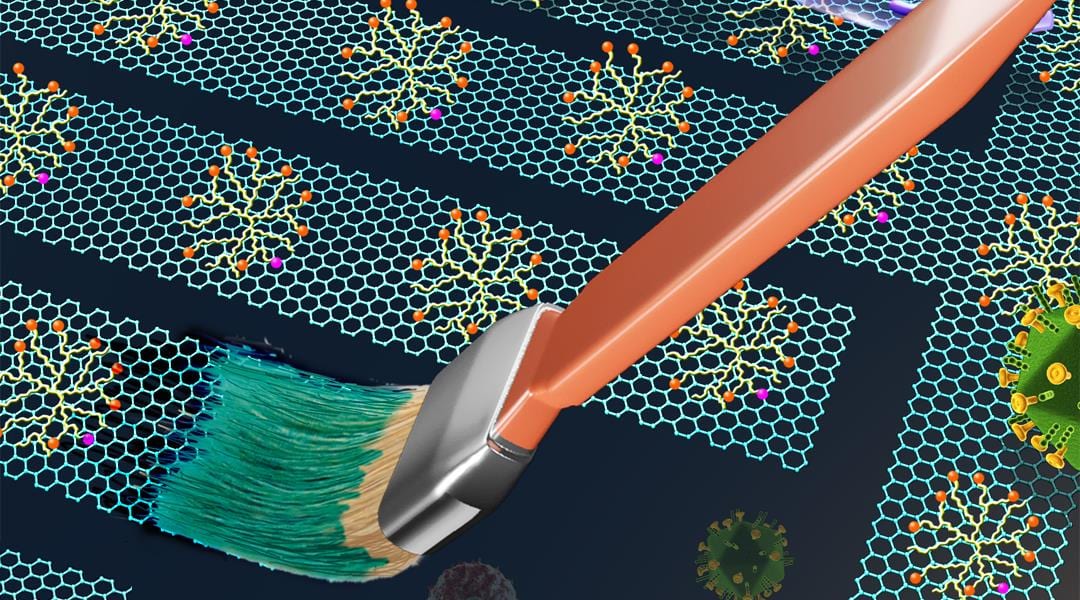

Flexible graphene nano-inks with an excellent bioactivity pave the way for next generation biomedical applications.

A team of researchers use in-situ transmission electron microscopy (TEM) to record the dynamic evolution of structural and electrical interfacial properties of zirconium dioxide films on aluminum oxide and indium gallium arsenide (InGaAs) substrates. This investigation paves the way towards faster, more efficient high-speed electronic devices.

Chunmeng Shi and co-workers from the Third Military Medical University in Chongqing, China, introduce a small-molecule-based cancer theranostic agent for simultaneous cancer-cell mitochondrial targeting, NIR imaging, and chemo-/PDT/PTT/multimodal therapeutic activities.
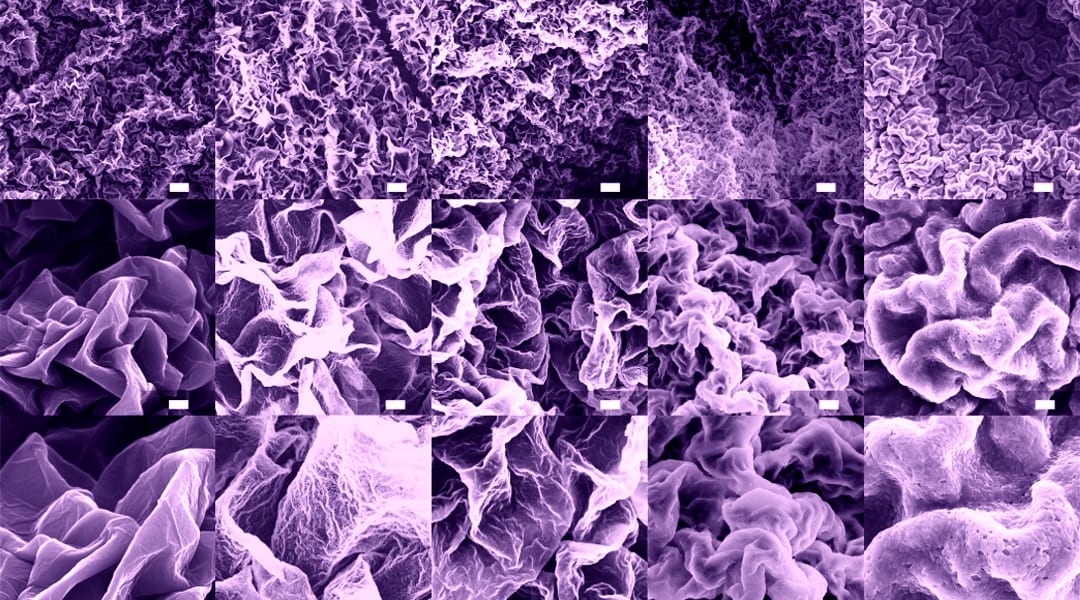
Metallized graphene inks open new directions in film patterning since dense ceramic films with the micro- and macrostructure of a graphene host were produced for the first time in Brown University

A nanocomposite possessing high NIR-transparency is developed, and shown to be applicable for NIR photography, security, and forensic-related applications.

A group of researchers from the Massachusetts Institute of Technology (MIT) generate living materials and devices by 3D printing genetically programmed bacterial cells. The living bioink can be used to print novel materials including logic gates and a living tattoo for chemical detection on human skin.

Fengyu Li and Yanlin Song from the Chinese Academy of Sciences, along with their co-workers, have designed high-performance flexible perovskite solar cells (PSCs) for wearable electronics using green printing technology.
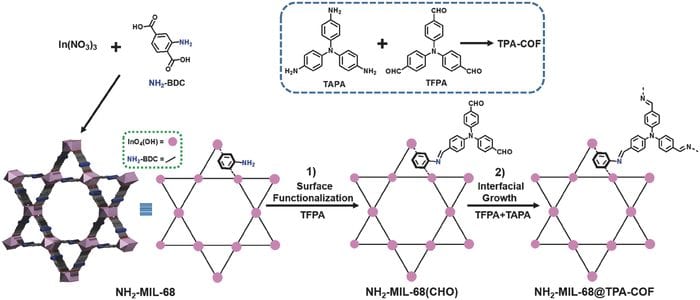
Hua Zhang and his colleagues in Nanyang Technological University presented an elegant strategy to synthesize a novel MOF@COF core-shell hybrid material.
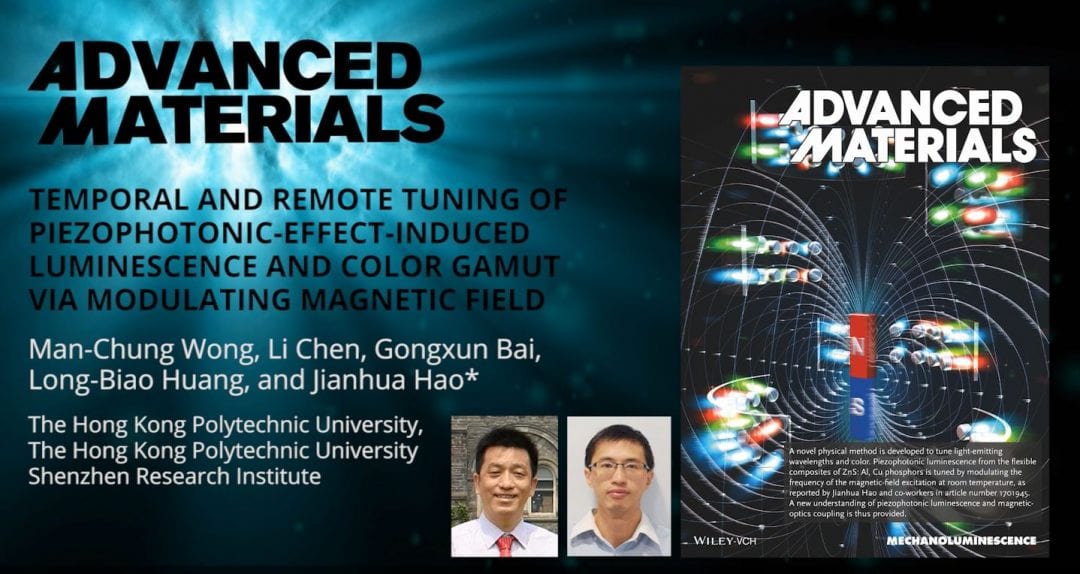
Researchers from Hong Kong Polytechnic University and the Hong Kong Polytechnic University Shenzhen Research Institute achieve remote and temporal tuning of luminescence intensity and wavelength in green- and blue-emissive piezophosphors by modulating the magnetic field. This novel method is promising for applications in magnetic optical sensing, piezophotonics, energy harvesting, nondestructive environmental surveillance, novel light sources, and displays.

University of Houston and Pennsylvania State University researchers fabricate conducting polymer microcups from polylactic-co-glycolic acid (PLGA) for neural applications and drug delivery. These microcups are tunable in terms of size, surface roughness, electrical properties, and drug release.
 New theory suggests gravity is not a fundamental force
 Higgs boson may be driving the Universe’s expansion
 Water-powered gadgets may be on the horizon thanks to new evaporation-based energy device
 Scientists discover a new class of antibiotics
 Micron-sized hidden dimensions could solve two of physics’ deepest puzzles
 A new type of dark matter could explain mysterious radiation from the Milky Way’s core